Introduction
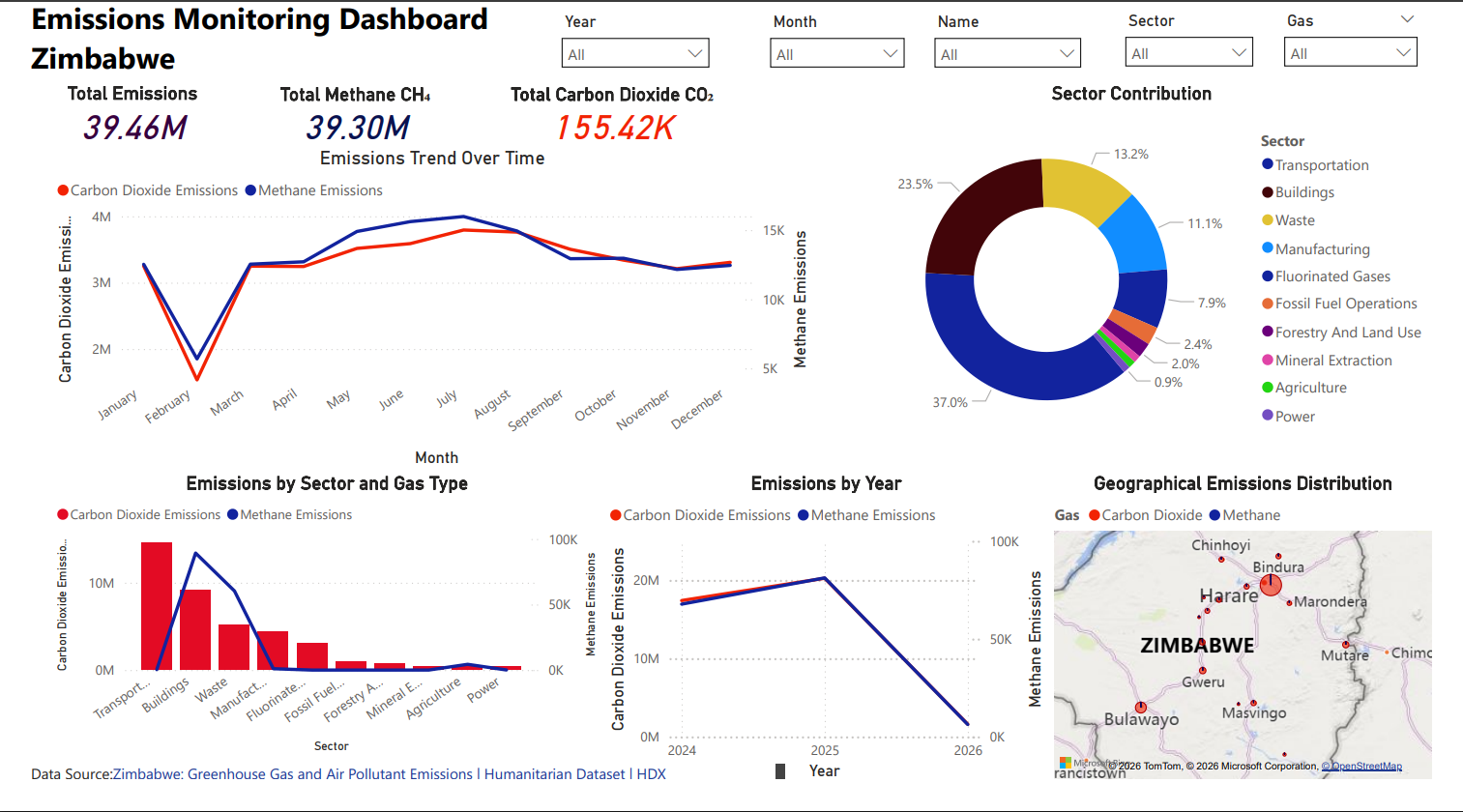
Greenhouse gas emissions are a major driver of climate change, affecting ecosystems, economies, and livelihoods worldwide. Although Zimbabwe contributes a relatively small share of global emissions, the country faces significant climate-related challenges, including droughts, changing rainfall patterns, water scarcity, and reduced agricultural productivity. Understanding the sources, trends, and geographical distribution of emissions is essential for developing effective mitigation and adaptation strategies. This project utilized data analytics and visualization techniques to examine greenhouse gas emissions across Zimbabwe. By analyzing emissions by sector, gas type, location, and time, the study provides valuable insights to support evidence-based environmental planning and climate action.
This project used crime and public safety datasets to identify patterns, trends and risk factors that influence criminal activity and drug-related incidents.
Project Objectives
- Analyze greenhouse gas emission trends over time.
- Identify the dominant greenhouse gases contributing to total emissions.
- Determine which economic sectors contribute most to emissions.
- Examine geographical patterns and emission hotspots.
- Generate actionable insights to support climate policy and sustainability initiatives.
- Demonstrate the value of data analytics in environmental decision-making.
Key Findings
Carbon Dioxide Dominates Emissions
Carbon dioxide (CO₂) is the primary greenhouse gas emitted in Zimbabwe, accounting for approximately 39.30 million tonnes of total emissions. Methane emissions are significantly lower, indicating that energy consumption and fossil fuel use remain key drivers of emissions.🏢 Buildings Sector Leads Emissions
Recommendations
- Promote renewable energy adoption in residential, commercial, and industrial sectors
- Improve energy efficiency standards for buildings and infrastructure.
- Invest in sustainable transport systems and cleaner mobility solutions.
- Strengthen waste management and recycling programs to reduce methane emissions.
- Expand reforestation and afforestation initiatives to enhance carbon sequestration.
- Increase environmental monitoring and greenhouse gas reporting capabilities.
- Support climate-smart development policies that balance economic growth with environmental sustainability.
Conclusion
The analysis highlights that carbon dioxide emissions from buildings, transportation, and other energy-intensive activities are the primary contributors to Zimbabwe's greenhouse gas footprint. While the country's overall contribution to global emissions remains relatively small, targeted interventions in high-emission sectors can significantly improve environmental sustainability and climate resilience. The findings demonstrate the importance of leveraging data analytics and visualization tools to uncover hidden patterns, monitor environmental performance, and support informed decision-making. By prioritizing clean energy, sustainable urban development, and improved environmental management, Zimbabwe can strengthen its response to climate change while advancing long-term sustainable development goals.